Portugal has become one of the top destinations for South Africans seeking a better quality of life, safety, and access to Europe. 

With its warm climate, affordable cost of living, and welcoming expat community, it’s no surprise that more South Africans are making the move each year.

But immigrating isn’t just about choosing a new country—it’s about understanding the visa options, residency requirements, healthcare system, property market, and cultural differences that will shape your new life abroad.

In this guide, we’ll walk you through everything you need to know about how to immigrate to Portugal from South Africa, helping you plan your relocation with confidence.

Why South Africans are Moving to Portugal?

South Africans, like people from various other countries, are choosing to move to Portugal for a variety of reasons. Some of the key factors driving this migration include:

Quality of Life

A mild climate, stunning landscapes, and a relaxed lifestyle contribute to Portugal’s reputation for high quality of life. For many South Africans, the opportunity to enjoy a healthier and more balanced way of living is a strong motivation.

Safety and Stability

Ranked among the safest countries in the world, Portugal offers peace of mind to those seeking a secure environment, which is particularly appealing for families leaving behind safety concerns.

Education and Healthcare

Access to reliable healthcare services and good educational opportunities makes Portugal an attractive option for families planning their future abroad.

Language

English is widely spoken in cities and tourist areas, easing the transition for South Africans, most of whom already speak English fluently. This lowers the language barrier when integrating into daily life.

Retirement Destination

For retirees, Portugal’s welcoming policies, relatively affordable cost of living, and warm climate make it a popular choice for enjoying later years.

How to Move to Portugal From South Africa: Step-By-Step Guide

When you relocate to Portugal, the immigration process unfolds in two main stages. First, you submit your visa application at the Portuguese Consulate in your home country. After your visa is approved and you arrive in Portugal, you then complete the second stage, which is finalizing your residence permit.

Step 1: Visa Submission at the Portuguese Consulate

Before you can submit your visa application, you’ll need to secure a few key requirements:

NIF (Tax Number)

This is your Portuguese tax identification number. It’s needed for almost every step of the relocation process.

Portuguese Bank Account

You’ll need a Portuguese bank account to show financial stability, pay rent, and handle daily expenses.

Visa Travel Insurance

Your visa requires travel or health insurance that covers you until you are legally resident in Portugal.

Accommodation

You must show proof of accommodation—this can be a rental contract, a long-term lease, or host invitation depending on the visa.

Step 2: AIMA Appointment in Portugal

After your visa is approved and you arrive in Portugal, you’ll attend an AIMA (formerly SEF) appointment. During this visit, you may need to provide updated documents and you’ll also give your biometric data, including your photo, signature, and fingerprints. 

Once everything is finalized, Portugal will issue your residence card—usually valid for two years—which will be mailed directly to your Portuguese address.

Required Documents to Immigrate to Portugal

The initial step in your move from South Africa to Portugal is to apply for a Portuguese residence visa. Therefore you must submit the appropriate documentation to one of the Portuguese consulate offices in South Africa. Visa Application Form

  • Your Valid Passport
  • Two recent passport-size photos
  • Your Portuguese NIF number
  • Criminal Record certificate
  • Valid travel insurance, including medical coverage and repatriation
  • Documentary evidence of having accommodation in Portugal
  • Portuguese Bank Account with proof of sufficient means in Portugal (latest 3 months bank statements)
  • Declaration with the reasons for requesting Portuguese Residency

Processing Time Portugal Visa

Residency Visa Processing Time

Visa Options for Moving to Portugal From South Africa

South Africans who want to relocate to Portugal have access to different types of visas, depending on the purpose of their move. The specific types of visas available in Portugal for South Africans are:

Portugal D7 Visa

Portugal D7 Visa, which is perfect for retirees or those with passive income. As of 2026, this visa requires proof of minimum monthly regular income of €920, and the ability to support yourself without working in Portugal. 

Portugal D8 Visa Digital Nomad Visa

The D8 Visa also know as, Digital Nomad Visa Portugal, is dedicated for remote workers and freelancers, that according to the minimum salary in Portugal in 2026, must have a minimum monthly income of €3,680, allow them to live and work in the country for up to a year, or applying for residency in Portugal enjoying all the benefits of the Portuguese lifestyle while earning an income from their remote job or business.

Portugal D2 Entrepreneur Visa

D2 Visa Portugal in case you are an entrepreneur looking to start or develop a business in Portugal, which allows you to obtain a residence permit for up to two years.

Where do South Africans live in Portugal

South Africans who choose to live in Portugal may settle in various regions throughout the country, depending on their preferences and circumstances. Some of the popular areas where South Africans and other expatriates often choose to live in Portugal include:

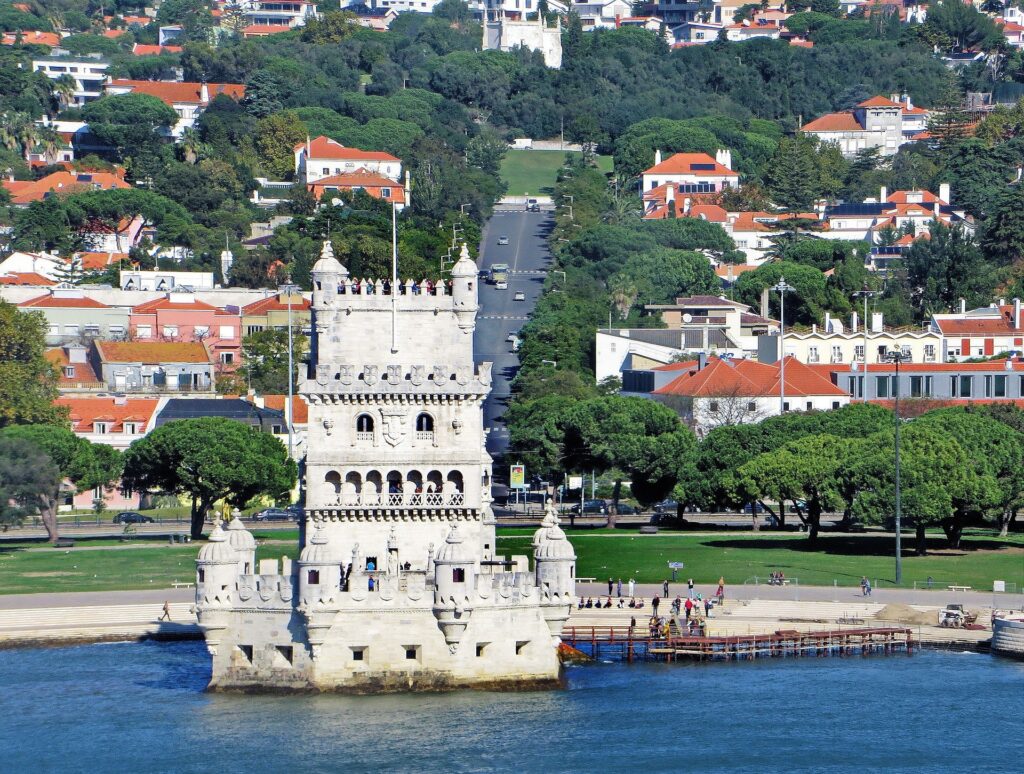
lisbon belem portugal residency advisors

South Africans in Lisbon

Lisbon is the most popular choice for South Africans thanks to its international lifestyle and diverse expat community. Around 12% of the city’s population is foreign, and South Africans are well integrated into this multicultural environment. 

Algarve

South Africans in the Algarve

The Algarve Algarve is another favourite, especially for families and retirees. With over 22% of residents being foreigners, the region has a strong expat presence. South Africans are drawn to the warm climate, relaxed lifestyle, and beautiful coastal towns like Albufeira, Lagos, and Vilamoura.

Porto

South Africans in Porto

Porto is growing in popularity among South Africans seeking a quieter, more traditional Portuguese experience. While the community is smaller than in Lisbon or the Algarve, Porto offers a cosmopolitan atmosphere, a strong cultural scene, and a high quality of life.

Portugal Taxes

Portugal follows a residency-based tax system, meaning you become a tax resident once you spend 183 days in the country within a 12-month period or establish a permanent home. After becoming a resident, you are required to declare your worldwide income in Portugal.

Personal income is taxed under a progressive IRS system, starting at 13% and reaching 48% for higher earnings. These rates apply to employment income, business activity, pensions, and most other types of personal income. With the Double Taxation Agreement (DTA) between Portugal and South Africa, you’re protected from paying tax twice on the same income — a key advantage for anyone who still has income or investments in South Africa.

For those buying property in Portugal, rental income is taxed differently based on residency. Residents are taxed according to the progressive IRS brackets, while non-residents pay a flat 28% rate, usually after allowable deductions.

Cost of Living in Portugal vs South Africa

The cost of living in Portugal is generally higher than in South Africa, but still affordable compared to most Western European countries.

According to Numbeo, Portugal’s overall cost of living is about 33.5% higher than South Africa’s. To enjoy a similar lifestyle, you would need around 78,024 ZAR (€3,863) per month in Lisbon, assuming you rent in both cities.

Here are a few quick Numbeo-style comparisons:

  • Rent in Lisbon is typically 40–60% higher than in Johannesburg.
  • Eating out is about 20–30% more expensive in Portugal.
  • Groceries in Lisbon can cost 25–35% more depending on the product.
  • Public transport in Portugal is generally affordable, often cheaper than South Africa in major cities.

Even with higher living costs, Portugal remains one of the most affordable countries in Western Europe—cheaper than Spain, France, or Germany. Many South Africans appreciate Portugal’s balance of cost, safety, lifestyle, and climate, making it an appealing choice for relocation or long-term stays.

Country Comparison: Portugal vs. South Africa

Is Portugal Safe?

Portugal is widely recognised as one of the safest countries in the world, consistently ranking high on global safety indexes. With low crime rates, a peaceful society, and a strong sense of community, it has become a top choice for families, retirees, digital nomads, and investors.

The country offers stable political conditions, well-trained police services, and a welcoming atmosphere that makes everyday life feel secure. Violent crime is rare, and most incidents tend to be minor, such as petty theft in busy tourist areas—easily avoided with basic precautions.

For those considering relocation or long-term stays, Portugal’s safety is one of its biggest advantages. Whether you’re living in Lisbon, Porto, the Algarve, or smaller towns, residents commonly report feeling safe walking around both day and night.

Why South Africans are Investing in Portugal Real Estate?

South Africans are increasingly choosing Portugal for buy-to-let opportunities, relocation, and holiday homes thanks to its stability, lifestyle, and strong rental demand.

Portugal Buy-to-Let Investment Appeal

  • Stable property market with consistent growth
  • Strong rental income potential, especially in Lisbon, Porto, and the Algarve
  • High tourism demand supporting year-round occupancy
  • Check here our Portugal Buy-to-Let Guide

But Property in Portugal to Live

  • Excellent quality of life with a safe, affordable European lifestyle
  • Attractive residency options, including the Golden Visa
  • Pleasant Mediterranean climate and welcoming communities
  • Check here our Guide for Buying a Property in Portugal

Buy a Holiday Home in Portugal

  • Warm weather ideal for year-round breaks
  • Beautiful coastlines, historic cities, and scenic landscapes
  • Good accessibility via international airports and modern infrastructure
  • Check here our Holiday Home Investment Guide 

International Schools in Portugal

For South Africans seeking English-speaking schools in Portugal, particularly in regions like Lisbon and the Algarve, there are several international schools and institutions that offer English-language education. 

  • International School of Algarve (ISA)
  • Carlucci American International School of Lisbon (CAISL)
  • St. Dominic’s International School

If you would like to explore all the international schools in Portugal please take a time to read the detailed guide of International Schools In Portugal

For more videos about investing or moving to Portugal, explore our YouTube channel here: YouTube Channel Portugal Residency Advisors.

What is Similar Between Portugal and South Africa?

Portugal and South Africa, despite being geographically distant and culturally distinct in many ways, share some similarities:

Colonial History

Both countries have a colonial history that has had a lasting impact on their cultures and societies. Portugal was a colonial power in Africa, including regions of present-day South Africa, while South Africa was under British and Dutch colonial influence.

Coastal Beauty

Both countries are known for their beautiful coastlines. Portugal’s coastline along the Atlantic Ocean is famous for its stunning beaches and cliffs, while South Africa boasts a diverse coastal landscape along the Indian and Atlantic Oceans, offering a wide range of beach and coastal experiences.

Wine Production

Portugal and South Africa are renowned for their wine production. Portugal is famous for its Port wine, Vinho Verde, and various regional wine styles. South Africa has a thriving wine industry, with vineyards in regions like Stellenbosch and Franschhoek.

Soccer Enthusiasm

Soccer (football) is a popular sport in both countries. Portugal and South Africa have passionate soccer fans, and the sport plays a significant role in their respective cultures.

How Can Portugal Residency Advisors Help You?

Portugal Residency Advisors® is an all-in-one consultancy with years of experience delivering bespoke residency and citizenship-by-investment solutions for international families and businesses relocating to Portugal. With an office in Lisbon and a hands-on, highly experienced team, we’ve helped hundreds of clients worldwide secure residency, citizenship, visas, property, and solid investment opportunities.

We support you every step of the way. Our focus on excellence, transparency, and personalised guidance ensures a smooth transition — and complete peace of mind — as you begin your new life in Portugal.

Frequently Asked Questions

South Africans wishing to move to Portugal typically need a residence visa to stay for more than 90 days. The specific visa type depends on the purpose of your move, such as work, study, or family reunification.

Yes, South Africans can apply for Portuguese citizenship after legally residing in Portugal for a period of five years. Alternatively, the Portugal Golden Visa program allows individuals to obtain Portuguese citizenship with a minimum average stay of 7 days per year.

Finding accommodation in Portugal can be done through rental agencies, online listings, or engaging a local buyers agent. 

Yes, as a South African passport holder, you can visit Portugal for short stays as a tourist without a visa, typically for up to 90 days within a 180-day period. However, if you intend to live in Portugal for an extended period, such as for work, study, or other reasons, you would generally need to apply for the appropriate visa and residence permit.

The Application Process for Portugal’s D7 Visa

  • Step 1: Collect all the necessary documents and fill out the application form.
  • Step 2: Submit your visa application.
  • Step 3: Once approved, receive your D7 Visa.
  • Step 4: Travel to Portugal to attend your appointment with AIMA, (Immigration and Borders Service), former SEF.
  • Step 5: Attend your scheduled appointment with AIMA.

For a brief journey lasting up to 90 days, you should request a Schengen visa. For an extended stay exceeding 90 days, you should seek a residency visa.

The most renowned long-stay residency visas in Portugal include the Golden Visa, D7 Visa, D2 Visa and D8 Visa. Eligibility for these visas is reserved for non-EU/EEA/Swiss nationals.

When considering the D7 visa versus the Golden Visa Portugal, it’s worth noting that the D7 visa may result in automatic tax residency in Portugal. Conversely, the Portugal Golden Visa program provides a distinct advantage: you can hold the visa without relocating to Portugal, as it does not categorize you as a tax resident.


Yes. Retirees from non-EU countries must secure a visa to relocate to Portugal. Upon arrival in Portugal, the next step is to apply for a residence permit. After residing in Portugal for five years, you have the option to apply for permanent residency or even citizenship, offering an opportunity to become a Portuguese citizen.

In 2021, based on data from the Portuguese National Census, there were 12,499 individuals born in South Africa living in Portugal.

When it comes to essentials like food and rent, Portugal is indeed somewhat pricier than South Africa, but it remains one of the most budget-friendly options in Europe.

The best place for South Africans to live in Portugal often depends on individual preferences and priorities. Lisbon and Porto are popular choices for those seeking vibrant urban living and career opportunities, while the Algarve’s beautiful coastal towns offer a relaxed lifestyle. For a mix of culture and tranquility, Cascais and Estoril near Lisbon provide an attractive option.