Skip to content

Reaching the end of your residency renewal cycle in Portugal often comes with a big question: what’s the next step? Should you renew your temporary residency, move forward to permanent residency, or take the final leap toward Portuguese citizenship? Each option comes with different requirements, benefits, and long-term implications—especially when it comes to language.
If you haven’t yet achieved the A2 Portuguese language level, renewing your temporary residency may be the only realistic choice for now. But if you’ve already earned your language certificate, you’re finally able to consider the two long-term paths many expats work toward: permanent residency or Portuguese citizenship.
📣 Portugal Citizenship Law Update 2025
On October 28, 2025, the Portuguese Parliament approved proposed amendments to the Nationality Law and the immigration framework, following their initial presentation by the government on June 23, 2025. This development marks a major step forward in Portugal’s ongoing legislative reform process.
The proposal aims to extend the minimum residency period for citizenship from five to ten years, or seven years for EU and CPLP nationals, and to revise how residency time is calculated—starting from the issuance of the first residence permit rather than the date the application was submitted.
The bill is not yet in effect, as it still requires Presidential review. The President may approve, veto, or refer the legislation to the Constitutional Court, and the final version could still be modified before promulgation.
Temporary Residency in Portugal
Temporary residency is the first step for most people relocating to Portugal, including Americans moving to Portugal, Canadians, and other non-EU nationals making the move. Depending on your visa type, it allows you to live, work, or study in the country while you settle in and start building your life. The most popular residency visas include the Portugal D7 Visa, the Golden Visa, and the D8 Digital Nomad Visa.
These permits are typically valid for two years and can be renewed as long as you continue to meet the requirements. Temporary residency is ideal if you’re still getting established, exploring different regions of Portugal, organizing your documentation, or preparing for the Portuguese language level you’ll eventually need for permanent residency or citizenship.
Permanent Residency In Portugal
Permanent residency marks the moment when life in Portugal becomes truly stable and long-term. After completing five years of legal residency and obtaining your A2 Portuguese language certificate, you can apply for a permit that allows you to stay in the country indefinitely. With permanent residency, you’ll enjoy most of the same rights as Portuguese citizens, along with far fewer renewals and reduced bureaucracy.
This option is especially attractive for those who feel settled in Portugal but want to keep their original citizenship, particularly if their home country does not allow dual nationality. Permanent residency offers long-term security while giving you the freedom to continue life in Portugal on your own terms.
Portuguese Citizenship
Portuguese citizenship is the final step for those who want full integration and long-term security in Portugal. After five years of legal residency—and with an A2 level in Portuguese—you can apply to become a citizen. This status gives you all the rights of a Portuguese national, including the ability to live, work, and study anywhere in the European Union, as well as access to the Portuguese passport, one of the world’s most respected.
For many expats, citizenship is the ultimate goal because it removes renewals, gives you lifelong rights in Portugal, and unlocks complete EU mobility. It’s especially appealing if your home country allows dual citizenship, letting you keep your original nationality while gaining all the benefits of being a European citizen. Portuguese citizenship is the strongest long-term option for anyone committed to making Portugal a permanent part of their future.
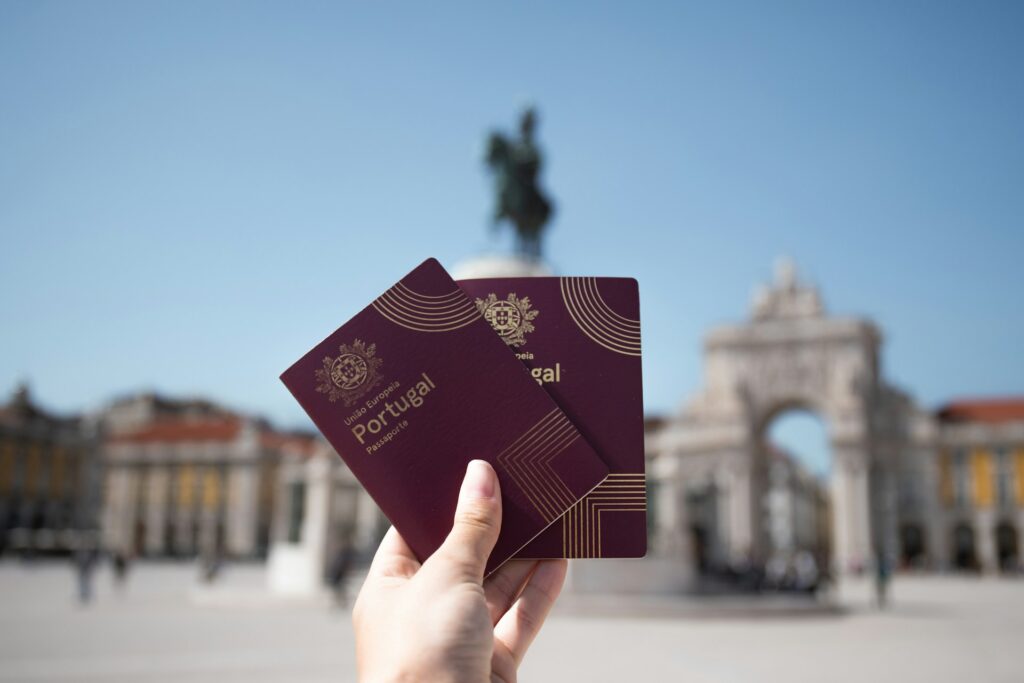
Reasons to Choose Permanent Residency Instead of Portuguese Citizenship
Permanent residency is often the better choice for people who want long-term stability in Portugal without taking the final step of becoming a Portuguese citizen. It gives you the right to live, work, and stay in Portugal indefinitely, with far fewer bureaucratic steps than temporary residency—yet without the commitment or complications that citizenship can bring.
One of the biggest reasons people choose permanent residency over citizenship is dual nationality restrictions. Some countries simply don’t allow their citizens to hold two passports, which means applying for Portuguese citizenship would require giving up their original one. Permanent residency avoids that issue entirely. You get almost all the same benefits—long-term stay, access to services, security, and stability—while keeping the nationality you were born with.
Another reason is simplicity. Citizenship requires more documents, more steps, and government processing that can take one to two years. Permanent residency is often faster and more straightforward, especially for those who already feel comfortable with their current travel rights and don’t need an EU passport.
Example: David, a 42-year-old entrepreneur from Japan
David has lived in Lisbon for several years, speaks Portuguese at the required A2 level, and loves the lifestyle. But Japan does not allow dual citizenship for adults. If he applied for Portuguese citizenship, he would have to renounce his Japanese passport—something he’s not willing to do. Instead, David chooses permanent residency, which lets him stay in Portugal indefinitely, continue his business, and enjoy almost the same rights as a citizen without sacrificing his Japanese nationality.
Reasons to Choose Portuguese Citizenship Instead of Permanent Residency
Portuguese citizenship is the ideal choice for anyone who wants full integration, long-term security, and the complete set of rights that come with being a citizen of an EU country. While permanent residency gives you stability, citizenship goes a step further by removing renewals, increasing your mobility, and offering lifelong protection.
One of the biggest advantages is EU freedom of movement. As a Portuguese citizen, you can live, work, retire, or study in any country within the European Union without visas or permits. This is a major benefit for people who want true flexibility across Europe, whether for personal, professional, or family reasons.
Another key reason is the strength of the Portuguese passport, which ranks among the best in the world. It offers visa-free or visa-on-arrival access to a large number of countries, making international travel much easier. Citizenship also gives you full political rights, including the ability to vote and participate in public life.
There’s also the inheritance advantage: your children, and sometimes even grandchildren, can benefit from your Portuguese citizenship, giving your family long-term opportunities in Europe.
Example: Emily, a 35-year-old remote professional from Australia
Emily has lived in Porto for several years and already holds permanent residency. But Emily wants the freedom to spend a year in Germany, maybe a few years in Spain, and eventually return to Portugal—all without having to worry about visas or residency rules. Australia allows dual citizenship, so applying for Portuguese citizenship is a natural step for her. With a Portuguese passport, Emily gains the ability to move freely across the EU, expand her career across different European countries, and secure future opportunities for her children.
Reasons to Choose Temporary Instead of Permanent Residency
Temporary residency can be the smarter choice for people who are still settling into life in Portugal or aren’t yet ready to commit to the requirements of permanent residency. It offers flexibility, simpler renewal process, less documentation, and fewer long-term obligations—making it ideal for those in transition.
One of the biggest reasons to stick with temporary residency is the Portuguese language requirement. Permanent residency requires an A2 Portuguese language certificate, and not everyone is ready for that step. If you’re still learning the basics or don’t have time to prepare for the exam, renewing your temporary residency allows you to stay in Portugal legally while you work on your language skills.
Another reason is uncertainty about long-term plans. If you’re not sure whether you want to stay in Portugal permanently—maybe you’re exploring job opportunities, trying out different regions, or seeing how your family adjusts—temporary residency keeps things simple. There’s no pressure to commit to the long-term requirements of permanent residency until you’re fully ready.
It’s also easier from an administrative point of view. Temporary residency renewals are straightforward if you continue meeting your visa conditions, whether it’s through passive income, remote work, or business activity.
Alex, a 33-year-old software developer from the United States
Alex moved to Lisbon with a D8 Digital Nomad Visa and loves Portugal, but he’s not sure if he’ll stay forever. His company might relocate him to another country in a couple of years, and he hasn’t reached the A2 Portuguese level yet. Instead of rushing into permanent residency, Alex chooses to renew his temporary residency. This gives him the freedom to stay legally, keep working remotely, improve his Portuguese at his own pace, and make a long-term decision when he feels ready.
Get In Touch With a Portugal Immigration Specialist
Portugal Residency Advisors® has assisted numerous international families in successfully relocating to Portugal and securing residency. Discover how our trusted, all-in-one solution makes your move simple and successful.
Portuguese Language Test for Citizenship
The CIPLE (Certificado Inicial de Português Língua Estrangeira) is the official Portuguese language exam required for anyone applying for Portuguese citizenship.
This A2-level exam is designed to ensure that future citizens have a basic but functional understanding of the language. Almost everyone seeking nationality must take the CIPLE to demonstrate they can communicate in everyday situations.
The exam lasts around two hours and is divided into three parts:
- Oral Comprehension – 30%
- Reading and Writing – 45%
- Oral Expression – 25%
To pass, you need a minimum score of 55%, and there’s a €75 exam fee. While it’s considered a beginner-level test, it still requires preparation, especially for those new to the language.
Alternatives to the CIPLE Exam
If you want to skip the CIPLE exam because it is too challenging or would prefer a different approach, there’s a practical alternative. You can meet the A2 language requirement by completing a Portuguese as a Host Language (PLA) course.
These courses are provided by accredited institutions and include 150 hours of instruction. Once you finish the program, you’ll receive a certificate that satisfies the language requirement for both permanent residency and Portuguese citizenship.
How Can We Help
Local Expertise
We know Portugal. Due to our extensive local knowledge, we believe that concentrating our services in a single country destination is the best way to give you the most thorough and useful information.
Honest Guidance
We recommend what’s best for you based on an extensive process experience that saves time and money to clients. Our pricing is clear and competitive, and we don’t sell services that make us more money.
All-in-One Solution
One single channel of communication for the entire process. We provide you with a comprehensive service that covers all aspects of your move, from identifying the ideal residency visa to finding your new home or helping you to settle.
Seamless Process
Technology plays a very important role in our company. We minimize our clients’ involvement in paperwork. We are customers ourselves and we know how to serve you.
Frequently Asked Questions
Can a Portuguese citizen have dual citizenship?
Portugal recognizes dual citizenship, meaning that Portuguese citizens who possess or obtain foreign citizenship can retain their Portuguese nationality, and individuals acquiring Portuguese citizenship do not need to relinquish their foreign citizenship.
How long do I have to wait for Portuguese citizenship?
For citizens of non-EU countries, the processing duration can vary from a few months to as long as two years. The timeframe depends on the government’s efficiency in handling your documents and the absence of any application-related complications.
Can American citizens move to Portugal?
In essence, you have the liberty to enter the country without a visa and stay for a maximum of 90 days. However, if you intend to establish long-term residency, obtaining a residence permit is a prerequisite. Find out more on how to move to Portugal from US from our extensive guide.
Who is eligible for Portuguese nationality?
You are eligible if you were born in Portugal, have Portuguese parents or grandparents, are getting marry to a Portuguese citizen, or have legally reside in Portugal for a minimum of 5 years. See more here: Portugal Citizenship by Descent (Through Parents): Who is Eligible and How to Apply
How strong is the Portuguese passport?
The Portuguese passport is highly covet and consider one of the most powerful passports globally. It offers visa-free entry to over 175 countries and territories. Portuguese citizenship can obtain through various avenues, such as birth or ancestry, naturalization, marriage, or adoption.
How long can I stay in Portugal without paying taxes?
In order to qualify as a Portuguese tax resident, you must satisfy at least one of the following criteria: Spend over 183 days (whether consecutive or not) in Portugal during a fiscal year. Possess a residence, commonly known as a “permanent home,” in Portugal during a fiscal year, irrespective of the number of days spent in Portugal.
What is the difference between Portuguese citizenship and permanent residency?
Citizenship is typically lifelong, while permanent residency imposes minimum stay requirements, where absences should not extend beyond two consecutive years or 30 months within a three-year period.
How long is the permanent residence card in Portugal?
The permanent residence permit is initially issue for five years and doesn’t have an expiration date. Nevertheless, it must renew every five years or in case of any changes in the register identification details.
What is A2 level Portuguese language?
According to the CEFR standards (Common European Framework of Reference for Languages), A2 Portuguese represents the elementary level. At the A2 level, Portuguese language skills correspond to a basic understanding of the language.
Can you buy a house in Portugal without citizenship?
Foreigners who wish to buy property in Portugal face no restrictions.
Can I travel in Europe with Portugal residence permit?
If you are a Portuguese citizen (or possess a long-stay visa in Portugal), you can travel across EU countries within the Schengen area without the need to present your Citizen Card or passport.

Excellent
4.9 | 47 Reviews