 Skip to content


The Algarve is one of Portugal’s most popular regions for international residents, but choosing where to live takes more than finding a beautiful beach. Lagos, Faro, Tavira, Portimão and the luxury communities around Almancil all feel very different, especially when it comes to housing, schools, healthcare, transport and life outside the summer season.
Some expats want a walkable town with restaurants, shops and an established international community. Others prefer a quieter village, a bigger property away from the coast or easy access to an international school. Retirees, remote workers and families often have different priorities.
The Algarve also changes a lot between July and January. A resort that’s lively in August can be much quieter in winter, while towns with a larger year-round population keep running all year.
This guide compares the best places to live in the Algarve for expats in 2026, including the pros, the limits and the lifestyle differences of each area.
Where Is the Algarve?
The Algarve is Portugal’s southernmost mainland region, stretching from the Atlantic coast near Sagres to the Spanish border at Vila Real de Santo António. It has 16 municipalities, with busy coastal cities, historic market towns, resort developments and rural communities.
If you’re thinking of moving, it helps to split the region into three broad areas.
Western Algarve (Barlavento) includes Lagos, Portimão, Lagoa, Silves and the coast toward Sagres. It’s known for dramatic cliffs, beaches, surfing and established international communities. The westernmost spots can feel fairly remote from Faro Airport and some specialist services.
Central Algarve includes Albufeira, Loulé, Vilamoura, Almancil and Faro. This part of the region has a concentration of international schools, golf resorts, private healthcare, shopping and easy airport access. Housing ranges from ordinary Portuguese residential neighborhoods to some of the country’s most expensive luxury developments.
Eastern Algarve (Sotavento) runs through Olhão, Tavira, Castro Marim and Vila Real de Santo António. Its landscape includes the Ria Formosa lagoon, salt marshes, traditional towns and long sandy beaches. Some areas feel less dominated by big tourist resorts, though international demand has grown here too.
These divisions are handy, but don’t treat them as strict lifestyle categories. A quiet residential neighborhood in Albufeira can suit year-round living better than a holiday development in another municipality.
How to Choose the Best Place to Live in the Algarve
Before you pick a town, think about how you’ll spend an ordinary week, not a summer vacation.
For families, being close to schools is often the biggest factor. A property that looks near a school on the map can still mean a long drive on the EN125 at busy times.
Retirees may put access to hospitals, pharmacies, supermarkets and an established community first. If you’d rather not drive much, look closely at walkability and public transport.
Remote workers need reliable internet, a home that works as an office and enough year-round services to make daily life comfortable. Someone with clients in North America may have different needs from a professional commuting to Faro.
Housing availability matters too. In tourist areas, a furnished place advertised for a winter rental may not be available for a full 12-month lease. If you’re moving permanently, confirm the contract length and whether the landlord plans to use the property in summer.
Finally, visit your shortlisted places outside peak season if you can. The Algarve in February is not the Algarve in August.
Best Places to Live in the Western Algarve
Lagos
Lagos is one of the most established destinations for international residents in the western Algarve. It has a historic center, beaches, a marina, restaurants and a fairly active social scene.
Unlike a small resort village, Lagos has supermarkets, medical services, schools and everyday businesses that serve permanent residents. Its train station also links it with other towns along the Algarve railway.
Popular residential areas include the historic center, the area around the marina, Porto de Mós and Meia Praia, and each feels different. The historic center is good for walking to restaurants and shops but can be busy and noisy in the tourist season. Porto de Mós is more residential and generally suits people who expect to drive.
Lagos is especially popular with retirees and remote workers who want an international community without living in a purpose-built resort.
The main downsides are housing costs in desirable areas, summer congestion and the distance from Faro Airport. If you have a family, think carefully about school journeys, especially if you’re considering an international school further east.
Best for: Retirees, remote workers and expats who want an active international community and coastal living.
Portimão
Portimão is a practical choice if you want to live in a working city rather than a mostly tourist town.
It has a large year-round population, shopping centers, supermarkets, public services, a railway station and one of the Algarve’s main public hospitals. That makes it a good fit if you need everyday services close by. The city center, the riverside area and the residential neighborhoods feel different from Praia da Rocha, which is more closely tied to tourism and holiday rentals. Portimão is also well placed for Alvor, Ferragudo, Lagoa and the rest of the western Algarve.
Its urban feel won’t suit everyone, though. Some neighborhoods are densely built, traffic can be heavy, and the city lacks the small-town charm of Tavira or the historic seaside atmosphere of Lagos. Even so, Portimão is worth a serious look if you’re a family, a retiree or anyone planning to live in the Algarve all year.
Best for: Expats who value hospitals, shopping, practical services and a year-round urban setting.
Ferragudo
Ferragudo is a small village on the eastern side of the Arade estuary, opposite Portimão.
Its whitewashed houses, waterfront restaurants and narrow streets feel more intimate than the larger towns nearby. It’s especially appealing if you want a traditional coastal setting but still want Portimão’s services within driving distance. The village has a compact center, but the surrounding residential developments and hillside properties can be harder to live in without a car.
Ferragudo is also popular with vacationers, and waterfront properties can carry a hefty premium. Housing is more limited than in a larger city. It works well if you like village life but don’t want to be cut off from urban amenities.
Best for: Couples and retirees who want a smaller coastal community near Portimão.
Carvoeiro
Carvoeiro, in the municipality of Lagoa, is a popular place to live for international homeowners.
The town sits around a small cliff-backed beach, with restaurants, shops and residential developments stretching inland. Nearby areas include Vale de Centeanes, Benagil and several established villa communities. Carvoeiro suits you if you want a detached house, outdoor space and a fairly quiet setting, and the wider Lagoa municipality has supermarkets, schools and healthcare.
Much of the housing outside the village center depends on a car, though. The steep terrain and spread-out residential areas make walking harder than it looks in photos. Tourism also has a big influence on the local property market, so if you’re looking at a long-term rental, check that it’s available beyond the winter months.
Best for: Retirees, second-home owners who plan to move permanently and families who prefer a villa lifestyle.
Sagres
Sagres is a very different side of the Algarve. Near Portugal’s southwestern tip, it’s surrounded by Atlantic beaches, exposed cliffs and surf spots such as Praia do Tonel. It draws surfers, outdoor enthusiasts and people who prefer a small community away from the busiest resort towns.
Life in Sagres revolves around the ocean, nature and a fairly informal lifestyle. It suits you if you enjoy surfing, hiking and being outdoors.
The trade-off is isolation. For specialist healthcare, bigger shops and some administrative services, you’ll need to travel toward Lagos or Portimão. It’s also windier than many sheltered parts of the Algarve. Choose Sagres for the lifestyle, not just because it’s on the coast.
Best for: Surfers, outdoor enthusiasts and remote workers who are comfortable somewhere quieter and more remote.
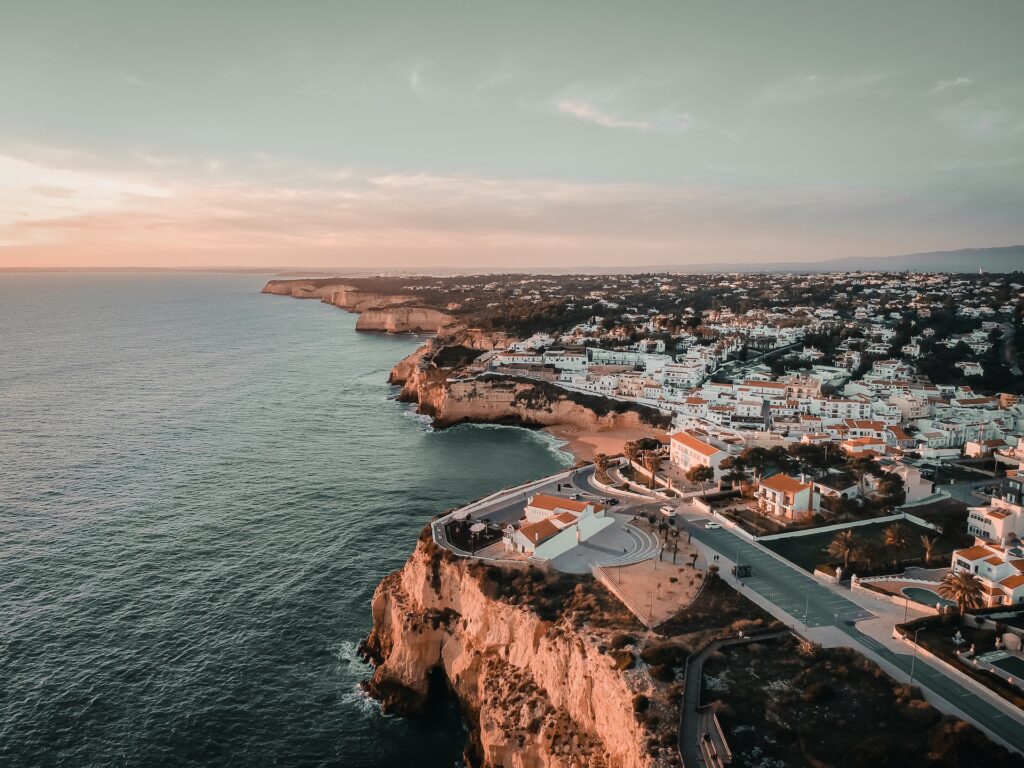
Best Places to Live in the Central Algarve
Albufeira
Albufeira is one of the Algarve’s best-known tourist destinations, but the municipality has more residential variety than its nightlife reputation suggests.
The Old Town and the Oura area draw huge numbers of visitors, especially in summer. If you want somewhere quieter, look at established residential neighborhoods away from the entertainment districts, or at places such as Olhos de Água and parts of Ferreiras. Albufeira has supermarkets, shops, private healthcare and access to the A22 motorway, and its central location makes it easy to reach other parts of the Algarve.
The main challenge is picking the right neighborhood. A property close to the bars and holiday apartments can feel very different from one on a residential street a short drive away. The Albufeira-Ferreiras railway station is outside the main tourist center, so living near the beach doesn’t automatically mean easy train access.
Best for: Expats who want a central Algarve location with plenty of services, as long as they choose their neighborhood carefully.
Vilamoura
Vilamoura is a planned coastal resort community in the municipality of Loulé, known for its marina, golf courses, landscaped residential developments and leisure facilities.
It suits international residents who want modern apartments, well-kept communal spaces, sports facilities and an established resort setting. The marina area has restaurants, cafés and shops within walking distance. Developments further inland may give you more space and privacy but generally need a car.
Vilamoura works especially well if you enjoy golf, sailing and an organized resort lifestyle. It’s also fairly close to Faro Airport and the rest of the central Algarve.
Housing costs and service charges can be higher than in ordinary Portuguese residential neighborhoods. Look at the purchase price separately from the ongoing costs of condominium fees, gardens, pools and maintenance.
Vilamoura is sometimes lumped in with the Algarve’s luxury property destinations, but it’s geographically and commercially distinct from the traditional Golden Triangle of Quinta do Lago, Vale do Lobo and Almancil.
Best for: Golf enthusiasts, retirees and international residents who want a modern resort setting.
Loulé
Loulé is a great option if you want to live in a Portuguese town rather than a coastal resort.
Inland from the central Algarve’s beaches, Loulé has a historic center, a municipal market, shops, schools and services that residents use all year. The town is known for its traditional market building and active local community. It feels more like everyday Portugal than Vilamoura or Quinta do Lago, while the coast is still a short drive away. It can also be a handy base for families who want access to central Algarve schools without living in an expensive resort development.
The surrounding municipality is large and includes rural properties, inland villages and coastal communities, so living in Loulé town is very different from living elsewhere in the municipality. A car is useful for beach trips and many journeys outside the center, but if you live in town you can do plenty of everyday errands on foot.
Best for: Families and expats who want year-round Portuguese town life with central Algarve amenities close by.
Almancil and the Golden Triangle
Almancil is an important residential and service center in the central Algarve, especially for international families and homeowners.
The town has supermarkets, local businesses, restaurants and access to international schools. It also serves the nearby luxury communities of Quinta do Lago and Vale do Lobo, which form the core of the Algarve’s traditional Golden Triangle, an area known for high-end villas, golf courses, resort amenities and heavy international property ownership.
Living in Almancil itself is quite different from living inside Quinta do Lago or Vale do Lobo. Almancil is a working town, while the resort communities focus on privacy, leisure facilities and exclusive developments. The area suits families whose kids attend schools in the central Algarve, as well as retirees and international homeowners who want privacy and easy access to Faro Airport.
Luxury properties can come with high ongoing maintenance costs, though, and many residential locations need a car for ordinary errands.
For a closer comparison of Quinta do Lago, Vale do Lobo and the surrounding luxury communities, read our Algarve Golden Triangle: Luxury Living in Portugal guide.
Best for: International families, luxury property buyers and residents who want private residential communities near Faro Airport.
Faro
Faro, the Algarve’s regional capital, is one of the best choices for expats who want an urban lifestyle.
Unlike a seasonal resort, Faro has administrative offices, schools, university facilities, hospitals, supermarkets, local businesses and a year-round residential population. Its historic center, pedestrian shopping streets and marina give the city character, while residential areas such as Penha, Bom João and Montenegro offer different housing options. Faro is home to the University of the Algarve and is especially handy if you need regular access to the airport, professional services or specialist healthcare.
The city also has a railway station and regional bus links, which makes it one of the more practical Algarve locations if you don’t want to rely on a car for every trip.
Faro isn’t a typical beachfront city, though. Getting to Praia de Faro or the barrier islands takes extra travel, and some of the region’s best beaches are reachable only by boat. It suits professionals, families and retirees who value everyday convenience more than living beside the beach.
Best for: Professionals, families and expats who want a walkable city with year-round services.
Olhão
Olhão, just east of Faro, has become more and more popular with international residents who want a traditional coastal town.
Its working fishing port, waterfront markets and access to the Ria Formosa islands give it a distinct identity. Ferries run to islands such as Armona and Culatra, where the beaches are part of the appeal. The town center has cafés, shops, markets and a railway station, so you can handle many daily errands without a car. Olhão is also close to Faro’s airport, hospitals and administrative services.
It feels more urban and locally rooted than a purpose-built resort. Some streets have older housing, so check the building’s condition, insulation and renovation needs closely. Olhão is a good fit if you like an active Portuguese town and don’t need a sandy beach right outside your door.
Best for: Expats who want local character, markets, walkability and access to Faro.
Best Places to Live in the Eastern Algarve
Tavira
Tavira is one of the Algarve’s most appealing towns for retirees and anyone who wants a quieter pace of life.
The town is split by the Gilão River, with historic buildings, traditional streets, restaurants and public squares. It feels very different from the heavily developed resort areas further west. Tavira has supermarkets, medical services, a railway station and a year-round local population. The surrounding municipality includes residential areas such as Santa Luzia, Cabanas de Tavira and Luz de Tavira.
Beach access is one of its quirks. Tavira Island is reached by ferry, and other coastal areas have their own ways of getting there. Don’t assume that living in Tavira town means you can walk straight onto an ocean beach.
The town is popular with international retirees, but families should look at school options and the distance to larger specialist services. Tourism is seasonal, especially in the historic center and coastal communities, but Tavira keeps a strong year-round identity.
Best for: Retirees, couples and expats who want historic surroundings and a quieter lifestyle.
Vila Real de Santo António
Vila Real de Santo António sits beside the Guadiana River on Portugal’s border with Spain.
Its planned historic center, broad streets and central square feel different from the older, winding streets of many Algarve towns. The town has supermarkets, local shops, cafés, public services and a railway station. A ferry across the Guadiana runs to Ayamonte in Spain, so cross-border shopping and leisure trips are part of local life. Nearby Monte Gordo has a long sandy beach and a more resort-style feel.
It suits people who prefer a smaller Portuguese town and like being close to Spain. It’s much further from Faro Airport and some regional specialist services than the central Algarve is, though. Also tell the town itself apart from the nearby beach resorts and residential developments, which can have different seasonal patterns.
Best for: Retirees and expats who want a smaller border town with access to Spain and the eastern Algarve beaches.
Get In Touch With Us
Portugal Residency Advisors® has helped hundreds of international families and investors secure residency, citizenship, and investments in Portugal. Get in touch with a specialist today and discover how we can help you start your journey to Portugal.
Living Inland: Silves and the Rural Algarve
Silves
Silves is an option if you want more space and a less tourism-focused setting.
The historic town is known for its castle, cathedral and spot beside the Arade River. It has supermarkets, local services and a year-round Portuguese community. The wider municipality includes rural areas, farmland and residential properties further from the coast, and some expats choose these for bigger gardens, detached homes or more privacy.
Inland living has its trade-offs, though. A property outside town may mean regular driving for shopping, healthcare and social life, and older rural houses may need spending on insulation, heating, water systems or upkeep. Silves isn’t automatically cheaper in every property category either, since renovated country houses and villas with land can be in strong demand.
If you enjoy Portuguese town life and are happy to live away from the beach, Silves can be a rewarding choice.
Best for: Expats who want historic surroundings, rural properties and a quieter year-round setting.
Quick Comparison: Best Places to Live in the Algarve
| Location | Lifestyle | Best Suited For | Main Consideration |
|---|---|---|---|
| Lagos | International coastal town | Retirees and remote workers | Housing demand and summer congestion |
| Portimão | Practical regional city | Families and year-round residents | Denser urban environment |
| Ferragudo | Small waterfront village | Couples and retirees | Limited housing supply |
| Carvoeiro | Coastal villa community | Retirees and villa owners | Car dependence |
| Sagres | Surf and outdoor lifestyle | Surfers and nature lovers | Distance from services |
| Albufeira | Busy central Algarve municipality | Socially active expats | Strong neighborhood differences |
| Vilamoura | Marina and golf resort | Golf enthusiasts and retirees | Higher property and maintenance costs |
| Loulé | Traditional inland town | Families and long-term residents | Driving to beaches |
| Almancil and Golden Triangle | International and luxury residential area | Families and high-end buyers | Cost and car dependence |
| Faro | Regional capital | Professionals and families | Beaches require additional travel |
| Olhão | Working coastal town | Expats seeking local character | No direct ocean beach in the town center |
| Tavira | Historic eastern Algarve town | Retirees and couples | Beach access and specialist services |
| Vila Real de Santo António | Border town | Retirees and cross-border travelers | Distance from central Algarve |
| Silves | Historic inland town | Rural lifestyle seekers | Transport and property maintenance |
There’s no single best town for every expat. The right choice depends on what you put first: a walkable city, being near international schools, an established foreign community, beaches or a quieter residential setting.
Practical Considerations Before Moving to the Algarve
The best location depends on access to essential services and how you plan to live your daily life, not just beaches and property prices.
Schools and Health Care
Faro and Portimão are good if you need good access to major public hospitals and specialist medical services.Smaller towns and rural communities may mean longer trips to appointments.
For families, school location matters just as much. Nobel Algarve British International School has campuses in Lagoa and Almancil, which makes those areas and nearby communities popular with families who want international education. Living within a reasonable school commute can make a big difference to daily life, especially when the EN125 is busy.
Transport and accessibility
A car is useful in much of the Algarve, especially in rural areas and residential developments outside town centers. Faro, Olhão, Portimão, Lagos and Tavira have railway links and walkable central areas, though convenience varies by neighborhood. Vilamoura, Carvoeiro and the Golden Triangle are generally more car-dependent. If you travel often, also think about your distance from Faro Airport, especially when comparing the central Algarve with Lagos or Sagres.
Year-round living and seasonality
The Algarve changes a lot between summer and winter. Tourist-oriented neighborhoods can get crowded in peak season, while some restaurants and businesses cut their hours in the quieter months. Faro, Portimão, Loulé and Olhão offer a more consistent year-round urban setting. Lagos and Tavira also have established permanent communities, but the experience can differ between residential neighborhoods and areas dominated by holiday rentals.
Before you choose, consider visiting outside the summer season and checking whether genuine long-term rentals are available.
Cost of Living in the Algarve
Living costs vary a lot across the Algarve, especially for housing. Portimão, Faro and Loulé have established residential neighborhoods where you can compare different types of apartments and houses. Desirable coastal spots in Lagos, Vilamoura and Carvoeiro can cost more, especially near beaches or resort facilities.
Quinta do Lago and Vale do Lobo are a different market segment altogether. Luxury villas, private pools, landscaped gardens and resort amenities can make both buying and maintaining a property much more expensive.
Location also affects transport costs. If you live in central Faro or Portimão, you may be able to do many daily errands on foot, while a household in a rural property near Silves or a villa development outside Carvoeiro will probably need a car.
For detailed monthly budgets, rental costs, utilities and everyday expenses, read our Cost of Living in Algarve in 2026 guide.

Buying Property in the Algarve
The Algarve has quite varied property markets from town apartments to rural houses and luxury villas on the coast.
Faro and Portimão suit buyers who want year-round services, while Lagos and Tavira draw international residents who want historic surroundings and the coast nearby. Silves and its countryside may suit you if you want a larger property away from the busy resort areas. Vilamoura, Quinta do Lago and Vale do Lobo are a more specialized market, with premium properties, golf facilities and established international communities.
Before you buy, think about how the property will work for you all year. Healthcare, schools, transport and supermarkets can matter more to permanent residents than being close to a beach or earning holiday rental income. Older townhouses and rural properties may also need extra legal and technical due diligence, especially if there have been renovations, extensions or changes of use.
Our Buying Property in Algarve: Complete Guide for 2026 explains the purchase process, property taxes, due diligence and regional market points.
For a closer look at the luxury market around Almancil, see [Algarve Golden Triangle: Luxury Living in Portugal].
Portugal Visa Requirements for Living in the Algarve
EU, EEA and Swiss citizens generally have freedom of movement, though you may need to register your residence if you stay in Portugal for more than three months.
If you’re a non-EU national planning to settle in the Algarve, you usually need a visa or residence authorization. Common routes include the Portugal D7 Visa for retirees and people with passive income, the Portugal D8 Digital Nomad Visa for remote workers who qualify, and the Portugal D2 Entrepreneur Visa for people starting a business in Portugal.
The Portugal Golden Visa may suit investors who want a residence route with limited physical presence requirements. Buying property in the Algarve doesn’t qualify as a Golden Visa investment, though.
The right route depends on your nationality, income, family situation and long-term plans. Our Portugal Immigration Guide explains the main residency options and application requirements.
Explore Other Places to Live in Portugal
The Algarve has a coastal lifestyle of its own, but if you’re looking for a bigger job market, more public transport or different housing options, then other parts of Portugal may be more suitable.
Lisbon has a higher concentration of international companies and urban services. Porto is a different city setting and climate, and the Silver Coast is more for people who like smaller coastal towns. If you like the idea of island living, Madeira is another option.
Check out our regional guides:
- Best Neighborhoods in Lisbon for Expats
- Best Places to Live on Portugal’s Silver Coast
- Best Neighborhoods in Porto for Expats
- Best Places to Live in Madeira
For a nationwide comparison, read our Best Places to Live in Portugal guide.
How We Can Help
Local Expertise
We know Portugal inside out. By focusing exclusively on one country, we provide clear, practical guidance based on deep local knowledge.
Honest Guidance
We recommend what’s truly best for you. Our advice is based on real experience, helping clients save time and money with transparent and fair pricing.
All-in-One Solution
A single point of contact for your entire relocation. From choosing the right visa to finding your new home and settling in Portugal, we support you at every step.
Seamless Process
Technology helps us simplify the process and reduce paperwork for our clients. As customers ourselves, we understand how to deliver a smooth and efficient experience.
Your Questions Answered
Is the Algarve a good place for expats?
Yes. The Algarve has established international communities, a mild climate and a wide range of places to live. Choosing the right location depends on access to schools, healthcare, transport and year-round services.
Which Algarve town is best for retirees?
Tavira, Lagos, Carvoeiro and Vila Real de Santo António are popular with retirees who want different lifestyles. Faro and Portimão may suit you better if you want easy access to hospitals and urban services.
Is the Algarve expensive to live in?
Costs vary a lot by location. Luxury communities such as Quinta do Lago and Vale do Lobo cost far more than many ordinary residential neighborhoods elsewhere in the Algarve. Housing, transport and lifestyle are usually the biggest factors in your budget.
Can foreigners buy property in the Algarve?
Yes. Foreign nationals can generally buy property in Portugal, including the Algarve. Owning property doesn’t give you residency rights, though, and real estate no longer qualifies for the Golden Visa.
What is the best Algarve town for golf lovers?
Vilamoura, Quinta do Lago and Vale do Lobo are among the best-established destinations for golfers, with well-known courses and leisure facilities.
Where do most English-speaking expats live in the Algarve?
English-speaking communities are especially visible in Lagos, Carvoeiro, Vilamoura, Almancil and Tavira. International residents live throughout the region, though, and each community has its own character.
What is the best place in the Algarve for families?
Faro, Loulé, Almancil, Lagoa and Portimão are good starting points because of their schools and everyday services. If you’re considering international education, check school locations and commuting times before you choose where to live.
Can you live in the Algarve without a car?
Yes, especially in central Faro, Portimão, Olhão and parts of Lagos or Tavira. Rural properties, villa developments and many resort communities are much easier with a car.
Is the eastern or western Algarve better for expats?
The western Algarve suits people who want dramatic coastal scenery, surfing and established international communities, especially around Lagos. The eastern Algarve has historic towns, the Ria Formosa landscape and the Spanish border nearby. The better choice depends on your lifestyle and access to essential services.
What is the quietest place to live in the Algarve?
Rural areas around Silves, Monchique and Castro Marim can be quieter than major tourist destinations. Think about driving distances and access to healthcare, shopping and other services.
Should I rent before buying a property in the Algarve?
It’s wise for many expats to rent first. You can see the seasons, see what transport is required and compare neighborhoods before you commit to a purchase.


